
• Пътища за достъп за влизане и излизане на оборудване;
• Озеленяване и зони за дейности.
Например:
За външно спа джакузи с размери 2200 мм × 2200 мм, препоръчителната действителна площ за монтаж е поне 3000 мм × 3000 мм. Това означава, че пространството за монтаж трябва да е поне с 30% по-голямо от размерите на устройството.
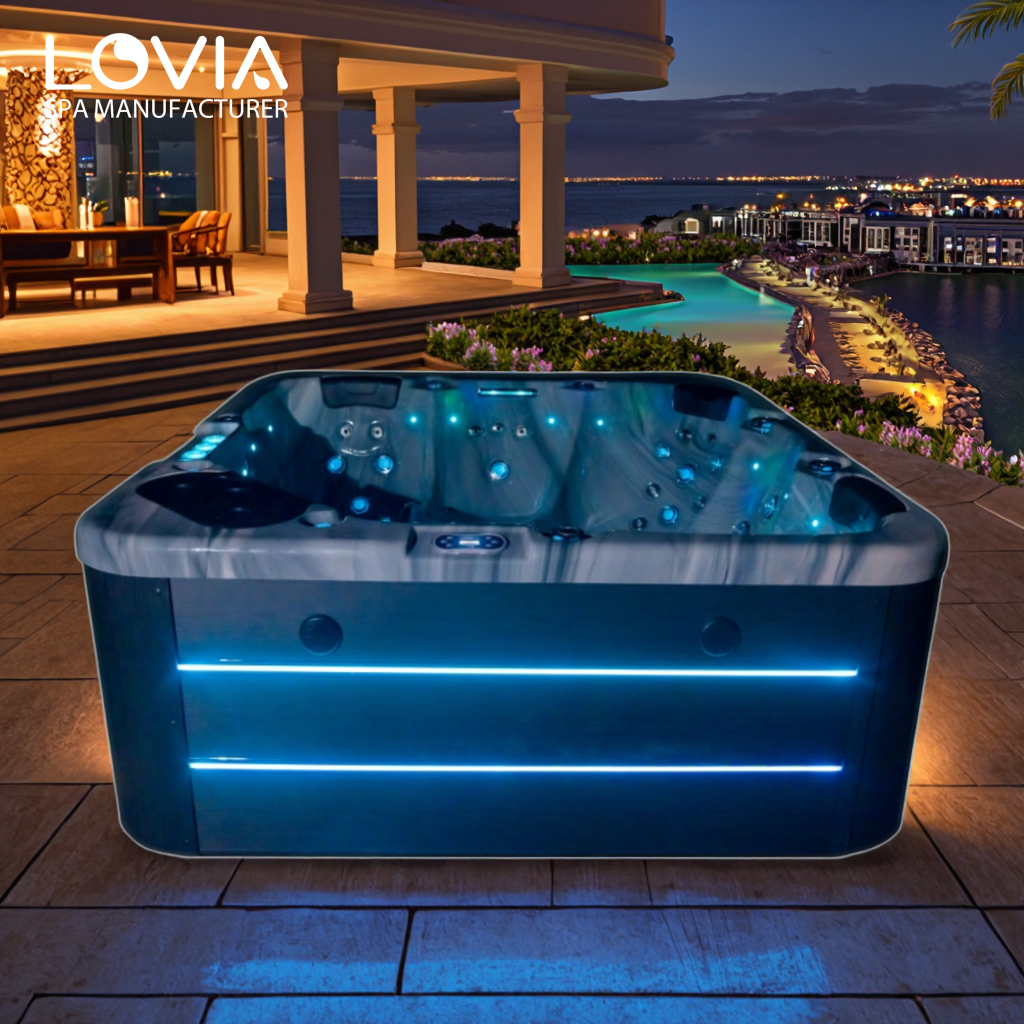
Професионалните марки обикновено предоставят подробни чертежи за монтаж. Например, по време на поддръжка на проекта, LOVIA® предлага съвети за монтаж, съобразени с условията на обекта на клиента, като по този начин помага за предотвратяване на бъдещи трудности с поддръжката и загуба на пространство.
ЧЗВ
Какъв е идеалният размер за външно спа джакузи?
За повечето домакинства, външното джакузи за 4 до 5 души е най-популярният избор, предлагащ най-добрия баланс между пространствена ефективност, комфорт и експлоатационни разходи.
Кое е по-добро: квадратно или кръгло външно джакузи?
Квадратните хидромасажни вани предлагат по-добра пространствена ефективност и гъвкавост, докато кръглите хидромасажни вани подчертават социалната атмосфера; изборът трябва да зависи от вашите специфични нужди.
По-голямото външно джакузи осигурява ли по-добър масаж?Не е задължително. Качеството на масажа зависи повече от разположението на дюзите, дизайна на водния поток и ергономичната структура, отколкото от физическия размер на ваната.Колко място трябва да се отдели за инсталиране на външно спа джакузи?
Препоръчително е да се резервира поне 30% повече пространство от действителните размери на устройството, за да се осигури поддръжка и безопасен достъп.
Може ли LOVIA® да предостави съвети относно планирането на размера?
Да. LOVIA® предлага професионални съвети за избор на модел и монтаж въз основа на размера на градината на клиента, състава на семейството и изискванията на проекта, като по този начин помага за постигане на оптимално планиране на пространството.
An outdoor spa hot tub is essentially a piece of social wellness equipment; its size and shape determine the nature of interactions between users and the level of comfort experienced.
Therefore, choosing the right size and shape is essentially about planning a lifestyle for the years—or even decades—to come.
How do you choose the right size based on household size?
For the vast majority of households, the number of users is the primary factor determining the size of the outdoor spa hot tub.
1. 2–3 Person Outdoor Hot Tubs
These models typically measure around 1,800mm × 1,800mm.
Suitable for:
•Couples;
•Small gardens or courtyards;
•Urban terraces or balconies;
•Vacation cabins.
Advantages include:
•Compact footprint;
•Lower energy consumption;
•Simple maintenance;
•Relatively lower purchase cost.
However, the limitations are also clear. Space can feel cramped when friends visit or the family grows, limiting social interaction.
2. 4–5 Person Outdoor Hot Tubs
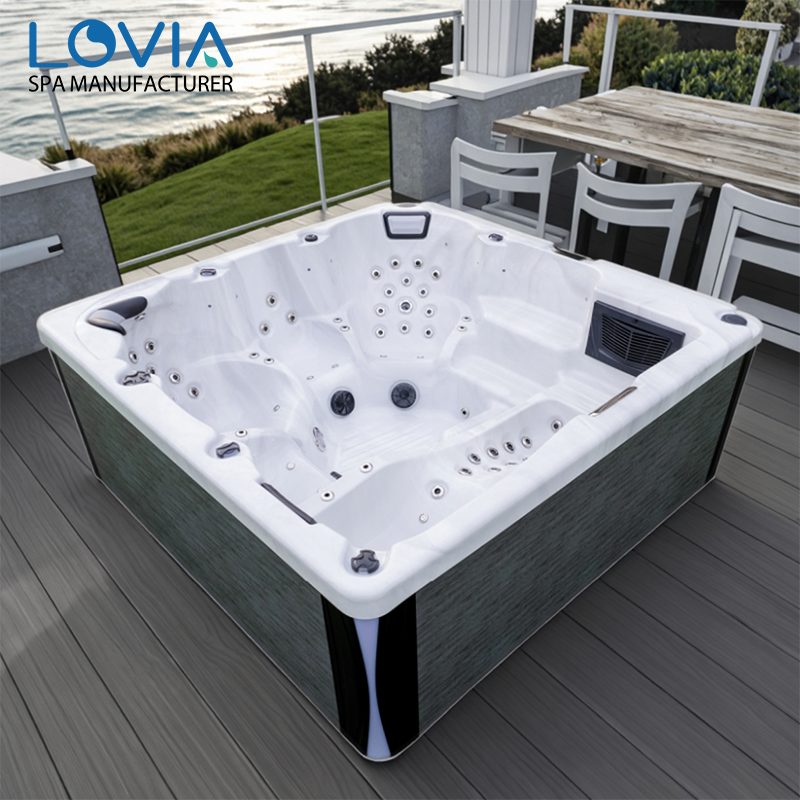
This is the mainstream specification with the highest global sales volume. Standard dimensions usually range from 2,000mm × 2,000mm to 2,200mm × 2,200mm. For most households, a 5-person spa hot tub strikes the optimal balance between space efficiency and comfort.
Market research indicates that over 60% of household buyers ultimately choose this size range.
The reasons are simple:
•It avoids wasting space during daily use;
•It easily accommodates gatherings with friends;
•Installation requirements are moderate;
•Long-term operating costs are reasonable.
Consequently, the 5-person spa hot tub is often regarded as the "gold standard" for the residential market.
3. 6–7 Person Outdoor Hot Tubs
Large outdoor spa hot tubs are suitable for:
•Multi-generational families;
•High-end villas;
•Vacation properties;
•Commercial wellness projects.
They typically measure over 2,300mm in size.
Their advantage lies in enhanced social interaction, but this also entails:
•Higher purchase costs;
•Higher energy consumption;
•More complex installation requirements;
•Greater maintenance demands.
Consequently, large outdoor spa hot tubs are best suited for scenarios with a clear need for multi-person use.
What are the common shapes for outdoor spa hot tubs?
Beyond size, shape plays a crucial role in the user experience. Current mainstream outdoor spa hot tubs generally fall into the following categories:
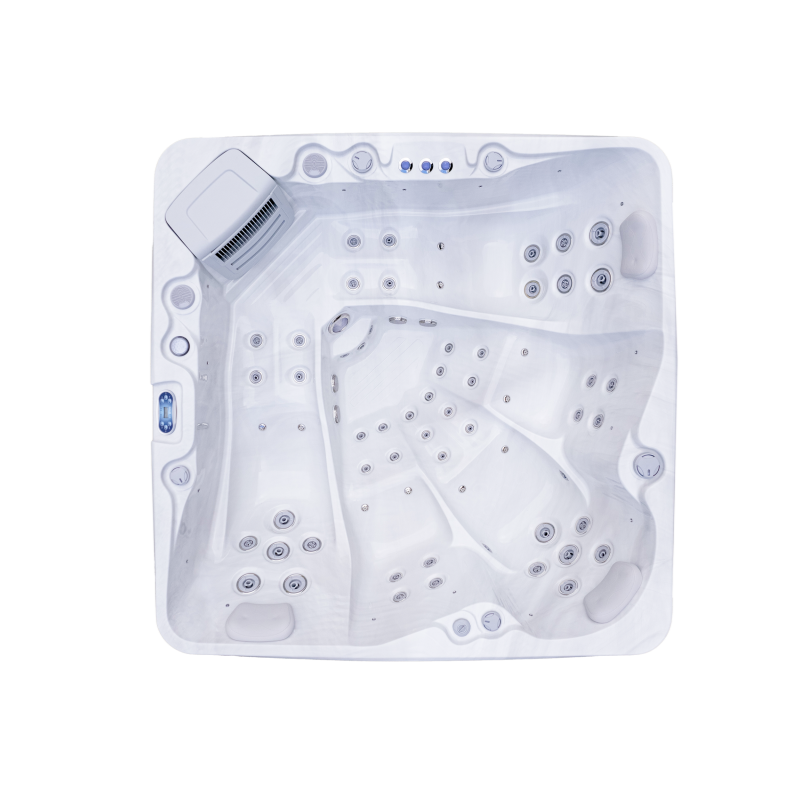
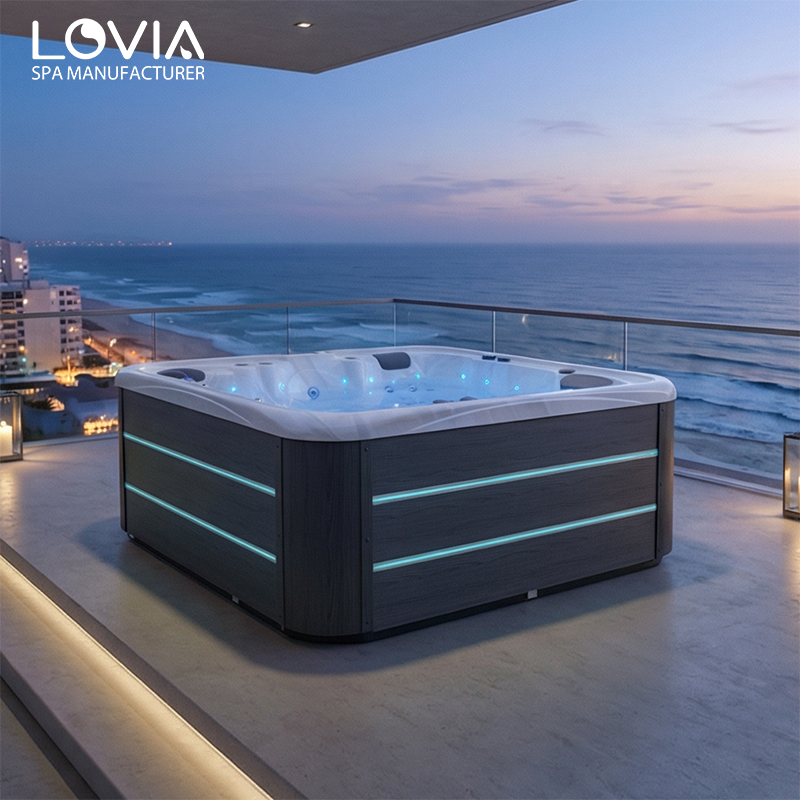
1. Square Outdoor Hot Tubs
This is the most popular design globally. Industry statistics indicate that over 70% of outdoor spa hot tubs feature a square structure.
Reasons include:
•Superior space efficiency;
•Flexible seating layouts;
•Adaptability to various garden designs;
•Easier transport and installation.
Square outdoor hot tubs are particularly well-suited to modern residential environments.
Whether placed on a terrace, in a garden, or near a pool, they blend seamlessly into the overall landscape design. For most household users, the square structure is often the safest, most reliable choice.
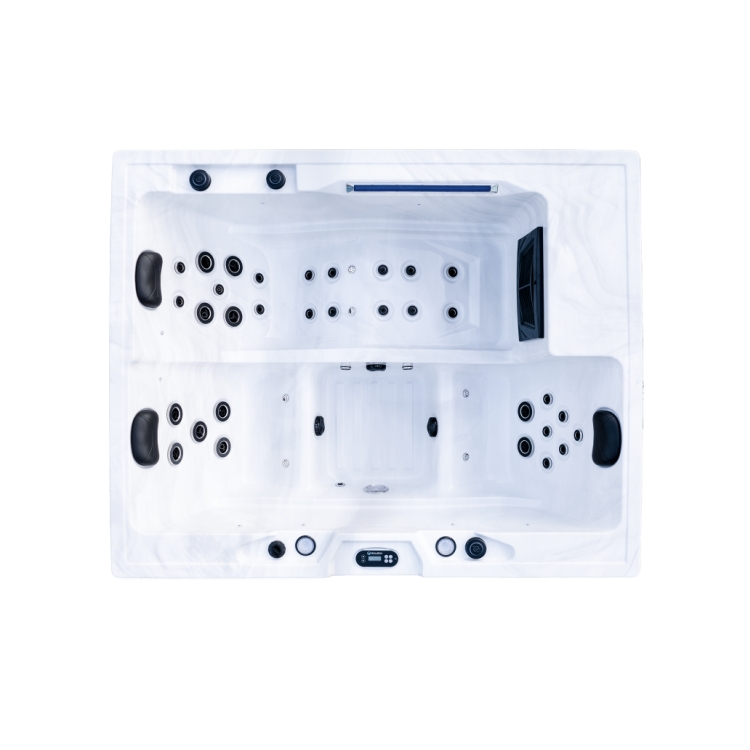
2. Rectangular Outdoor Hot Tubs
Rectangular designs have gained popularity in recent years, especially in high-end villa and modern architectural projects.
Key features include:
•A grander visual appeal;
•Suitability for linear landscape layouts;
•Compatibility with lounge-style seating;
•Better accommodation for body stretching.
Many high-end spa models utilize a rectangular structure to enhance the sense of luxury and comfort.
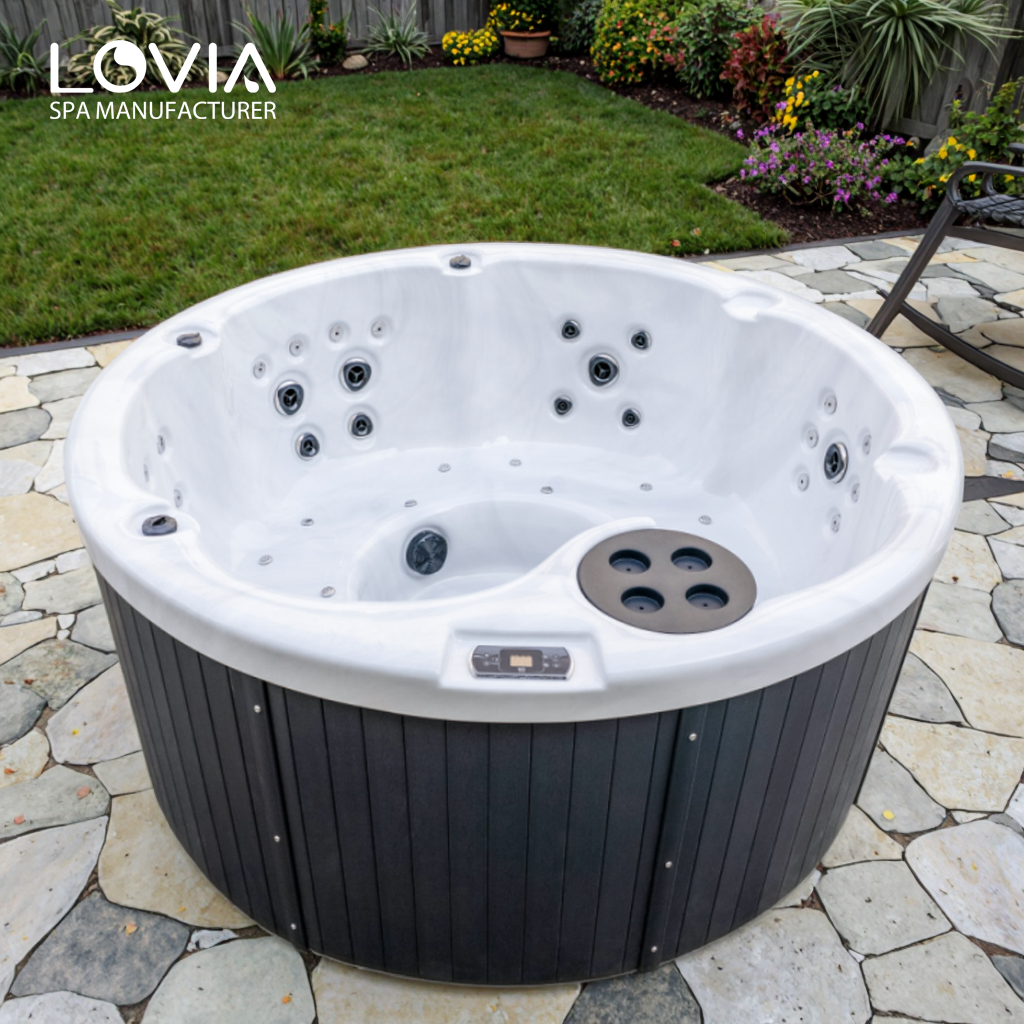
3. Round Outdoor Hot Tubs
Round designs have a long history; traditional wooden spa hot tubs, for instance, predominantly featured a round structure.
Their primary advantages are:
•More natural social interaction;
•Equal spacing between users;
•A strong sense of atmosphere.
However, the drawbacks are also evident:
•Lower space efficiency;
•Less installation versatility;
•Limited integration with modern landscape styles.
As a result, round outdoor hot tubs are currently found more frequently in unique homestays, resorts, and themed hotel projects.
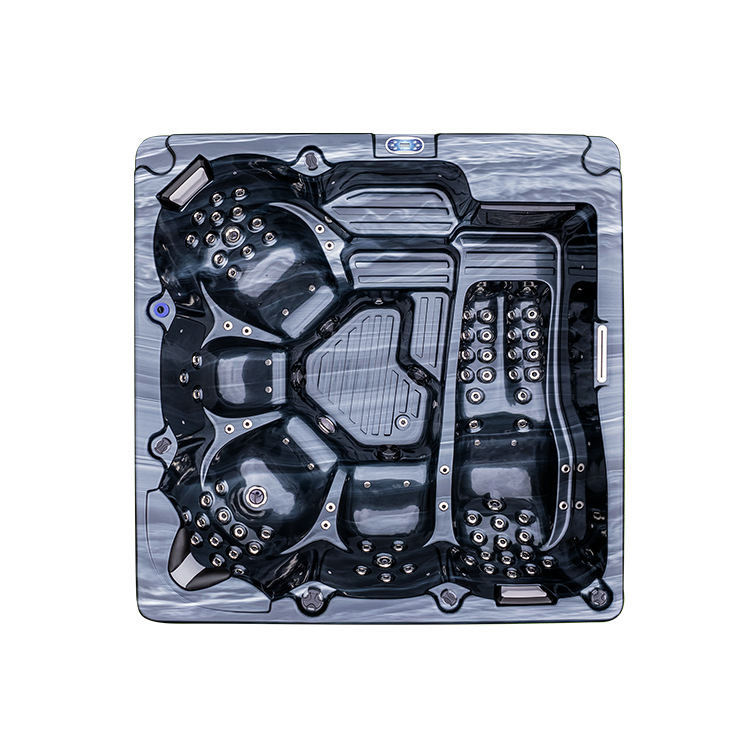
4. Irregularly Shaped Outdoor Hot Tubs
Some high-end brands offer products with unique, non-standard shapes. While visually striking, these models often come at a higher cost and present greater challenges regarding installation and maintenance. Consequently, they are best suited for high-end clients who prioritize personalized design.
How do you choose an outdoor hot tub based on the installation space?
Many consumers focus solely on the dimensions of the spa hot tub itself, overlooking the actual space required for installation. In reality, an outdoor spa hot tub cannot simply be placed down and used immediately.
In addition to the spa hot tub's dimensions, you must also allocate space for:
•Maintenance access;
•Electrical installation;
•Drainage areas;
•Access routes for moving equipment in and out;
•Landscaping and activity areas.
For example:
For a 2200mm × 2200mm outdoor spa hot tub, the recommended actual installation area is at least 3000mm × 3000mm. This means the installation space should be at least 30% larger than the unit's dimensions.
Professional brands typically provide detailed installation drawings. For instance, during project support, LOVIA® offers installation advice tailored to the client's site conditions, helping to prevent future maintenance difficulties and wasted space.
FAQ
What is the ideal size for an outdoor spa hot tub?
For most households, a 4-to-5-person outdoor hot tub is the most popular choice, offering the best balance of space efficiency, comfort, and operating costs.
Which is better: a square or a round outdoor hot tub?
Square hot tubs offer better space efficiency and versatility, whereas round spa hot tubs emphasize a social atmosphere; the choice should depend on your specific needs.
Does a larger outdoor hot tub provide a better massage?
Not necessarily. Massage quality depends more on jet layout, water flow design, and ergonomic structure than on the physical size of the tub.
How much space should be reserved for installing an outdoor spa hot tub?
It is recommended to reserve at least 30% more space than the unit's actual dimensions to allow for maintenance and safe access.
Can LOVIA® provide advice on size planning?
Yes. LOVIA® offers professional model selection and installation advice based on the client's garden size, family composition, and project requirements, helping to achieve optimal space planning.